
Amherst Primary School
Early Years Foundation Stage (EYFS)
Early Years Foundation Stage (EYFS)
|
|
|
|
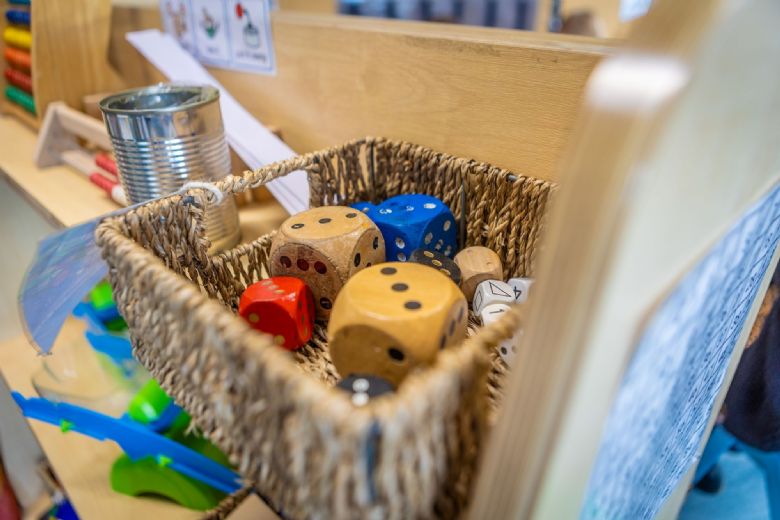
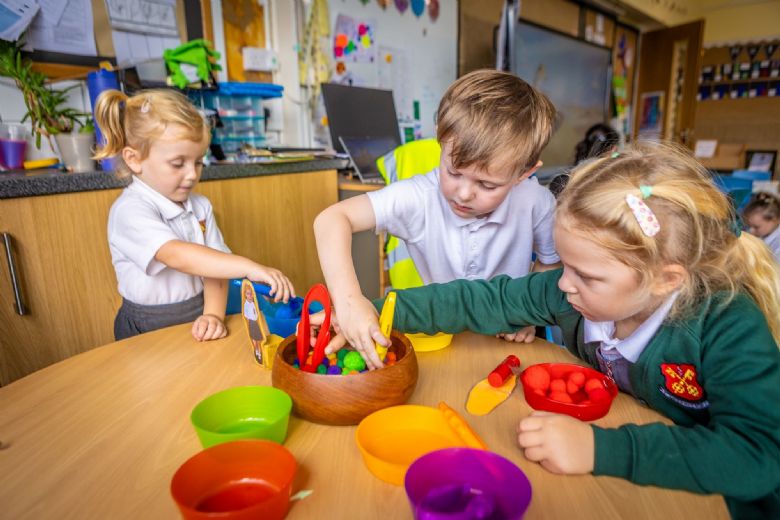
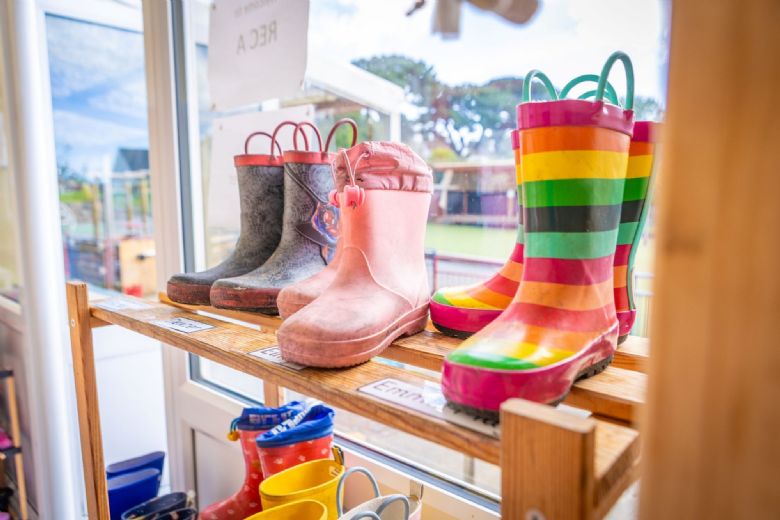
The Early Years Foundation Stage is often referred to as 'Reception' or 'Year R' and is children's first year in primary school.
The Reception staff team support and nurture the children during their transition into Amherst Primary School and throughout their first year with us in school. We believe that all our children need to feel content, secure, and valued, which should be done through developing positive relationships, so that they can flourish and be ready to learn.
Our aim is to develop confident children who begin to develop a love of learning at the start of their journey at Amherst Primary School. We focus on ensuring the children have the best possible start, and gain the knowledge and foundational skills they need to begin this learning journey.
Our school usually has three classes in Reception as well as a large shared outdoor learning area. We recognise the importance of a calm, purposeful and orderly environment to enable and support children’s play, learning and development. Our classrooms include many natural resources and displays have Hessian backgrounds. Within the environment, open-ended resources are accessible to children so that they are able to choose and develop activities independently.
We understand that high-quality interactions with adults positively impact children’s learning and progress in all areas of learning. So, we place great importance on adults being in the learning environment with the children and positively interacting with them, following their lead, to support and developing their skills, knowledge and characteristics of effective learning.
A Unique Child
We recognise that every child is a unique individual who is constantly learning and becoming resilient, capable, confident, and self-assured. We also acknowledge that all children develop at varying rates, which is unique to them.
At Amherst Primary School, we place emphasis on meeting the needs of the individual child and supporting them to learn and develop at their own pace. Our school values are used to develop their characteristics of effective learning and promote positive attitudes towards learning, which is done through praise, encouragement, celebration certificates and house points.
The Early Years Foundation Stage (EYFS) is made up of seven 'areas of learning', divided into three 'prime' areas and four 'specific' areas. These are:
Prime areas:
- Personal, Social, Emotional Development
- Physical Development
- Communication and Language
Specific areas:
- Literacy
- Maths
- Understanding the World
- Expressive Arts and Design
Characteristics of Effective Learning
The characteristics of effective learning reflect and underpin the different ways that children learn in Reception. Our Amherst school values also support and strengthen the characteristics of effective learning, in particular, resilience, confidence, and open-mindedness.
The characteristics run throughout all seven areas of learning and development. They represent processes, rather than outcomes, and support the children to become effective and motivated learners.
Some examples are below:
|
Playing and exploring – engagement |
Active learning – motivation |
Creating and thinking critically – thinking |
|
|
|
The Early Years Curriculum
Our Early Years curriculum encompasses all seven areas of learning. All areas of learning are important, interconnected and underpin each other.
There is a particular emphasis placed on the three prime areas of learning during the start of the children’s journey at Amherst Primary School, as these are particularly important for building a foundation for learning, so that children can thrive.
We aim to deliver a curriculum which meets the needs of the whole child. Areas of learning are taught through themes with strong links to the English texts we use. The teachers in Reception plan an overview of each term showing when special events are taking place, and our weekly plans include enhancements, activities and lessons linked to the skills and knowledge being taught.
We always aim to ensure there is a balance between adult-led and child-initiated learning, and we place great importance on learning through play, where children can practice and embed their skills and knowledge as well as develop their curiosity and sense of wonder.
Teaching Phonics at Amherst
At Amherst Primary, we follow the Sounds Write phonics scheme. Children in Reception have daily phonics teaching and when they are ready, have opportunities to read 'phonetically decodable' books at school and at home, from the Phonic Books Dandelion series, which follows the Sounds Write phonics progression.

Other useful documents / information...
Mathematics in Early Years
Our Maths curriculum in Early Years follows the White Rose Maths scheme as well as Number Sense programme. Our Maths lessons follow small steps which provide a variety of opportunities to develop children’s understanding of number, shape, measure, and spatial thinking.
English in Early Years
We use texts from Literacy Tree in our twice-weekly English lessons. Alongside the texts used in English lessons, we have developed our own reading spine. The reading spine has been created to ensure that children have access to a range of quality texts. These are used to promote reading for pleasure and to expose the children to rich language and vocabulary.
Books we read in Reception
To help you get an idea of some of the books we read in Reception, we have compiled our own Reception Reading Spine, which you can access below: